
Clark County Court Records After Arrest
The record path in Clark County is arrest, booking, custody or bond review, first appearance, prosecutor review, filing, court docket, hearings, plea or trial, and disposition. The Clark County District Attorney reviews many criminal matters after arrest. Steve Wolfson is the elected District Attorney in the research source, and the office handles felony and misdemeanor prosecution functions for many county cases.
A booking charge is not the same thing as a filed court charge. The jail profile may list the suspected offense used at intake. The court case shows the complaint, information, indictment, amended count, reduced count, dismissal, conviction, acquittal, bond order, warrant action, and sentencing entry. For the custody side, use Clark County jail inmate records. For booking photos, use the Clark County jail mugshots page.
Find Court Records After Arrest
Clark County has more than one court search channel. Felony and district-level matters are searched through the Clark County District Court public portal. Las Vegas Justice Court has its own public access search, and municipal matters may require the relevant city court. Start with the court most likely to receive the case, then widen the search if nothing appears.
- Search the CCDC roster for the current name, booking date, arrest charge, and any case reference.
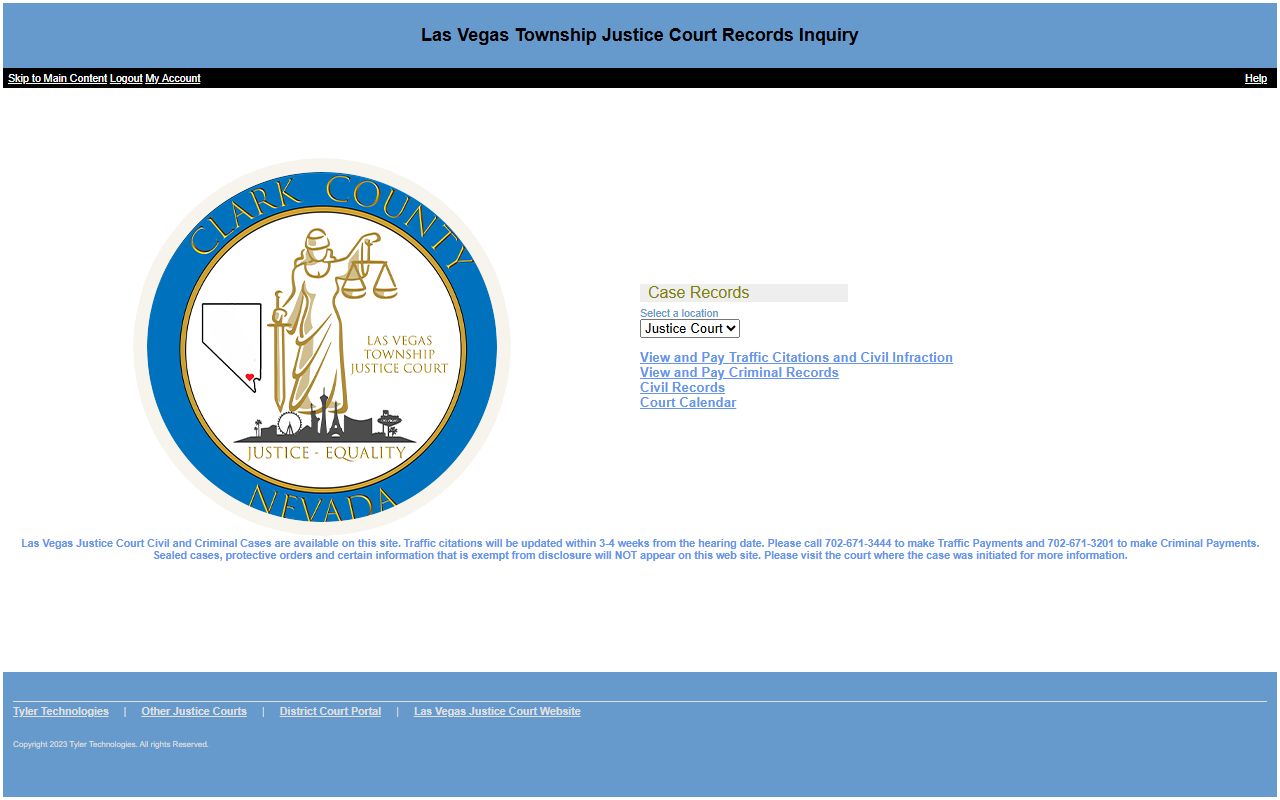
- Open Las Vegas Justice Court public access for initial criminal, traffic, and warrant-related proceedings.
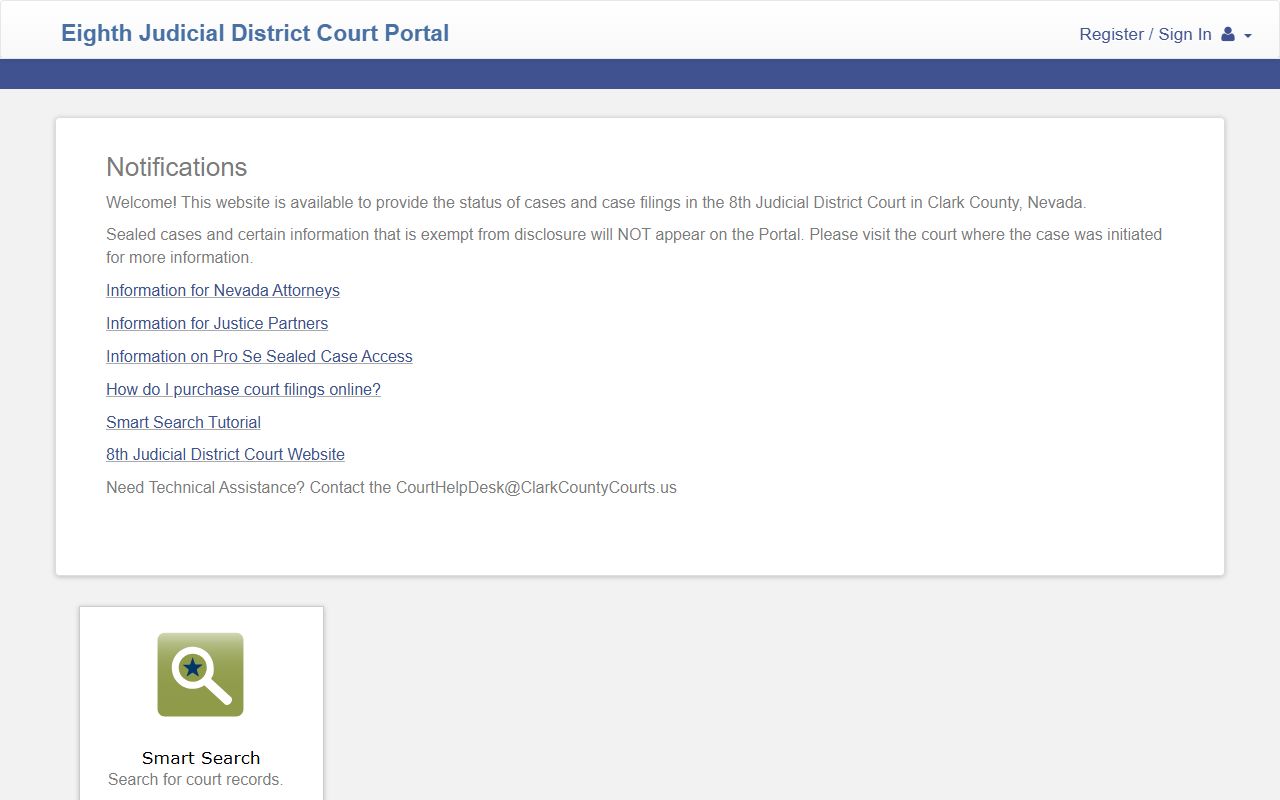
- Open the Clark County District Court portal for felony bindover, information, indictment, and later proceedings.
- Search by defendant name first, then by case number if the jail or court provides one.
- Read each charge status separately because one count can be dismissed while another remains pending.
The District Court portal is one of the main official sources for filed Clark County court records after a jail arrest.
Justice Court public access is also important because many first appearances, preliminary matters, warrants, misdemeanors, and lower-court cases may start there.
Clark County Court Search Fields
The portals support several routes into a case. Exact case numbers are best, but most public searches begin with a party name. Date and case-type filters can help when a common name returns too many results.
| Field Label | Type | Required | Notes |
|---|---|---|---|
| Case Number | Text | Optional | Best for an exact docket. |
| Party Name | Text | Optional | Search the defendant by name. |
| Business Name | Text | Optional | Usually not relevant for inmate lookup. |
| Date fields | Date | Optional | Narrows filing or hearing ranges where supported. |
| Case type | Filter | Optional | Criminal, traffic, civil, family, probate, and other options vary by portal. |
Charges Filed After Arrest
Formal charges enter the court record through a charging document. The name of that document depends on the case stage and procedure. The important point for a reader is that the document comes after arrest review and can differ from the jail booking entry.
| Document | Who Uses It | What It Does |
|---|---|---|
| Complaint | Prosecutor or authorized charging authority | Starts many criminal cases and lists the alleged offenses. |
| Information | Prosecutor | Common in felony cases after review or lower-court proceedings. |
| Indictment | Grand jury route | Charges serious matters through grand-jury action. |
The District Attorney's filed document is the court charge source. A charge may later be amended, reduced, dismissed, or resolved, so the docket should be checked again after each hearing.
Clark County Charge Status
Charge status terms can be plain once separated from custody terms. Pending means the count is still open. Amended means the count changed from an earlier version. Reduced means the charge was lowered to a different offense. Dismissed means that count ended. Acquitted means not guilty after trial. Convicted means guilt was entered or found.
| Status | What It Means |
|---|---|
| Pending | The charge remains unresolved. |
| Amended | The charge changed from an earlier version. |
| Reduced | The charge was lowered to a different offense. |
| Dismissed | The court terminated that count. |
| Acquitted | The defendant was found not guilty after trial. |
| Convicted | Guilt was entered by plea or found by verdict. |
Bond Changes After Arrest
Bond can change after the first appearance or later hearing. CCDC may show a bond field, but the court order controls release. A person can show a bond amount and still remain in custody because of another warrant, probation or parole hold, immigration detainer, federal hold, or no-bond order.
| Bond Type | How It Works |
|---|---|
| Cash | The full amount is paid to the court or jail cashier where accepted. |
| Surety | A bail agent posts bond; the family or defendant pays a private premium and possible collateral. |
| Own recognizance or PR | Release is based on a promise to appear and follow conditions. |
| Supervised release | Release includes monitoring or pretrial service conditions. |
| No-bond or hold | Release is blocked until a court or agency clears the issue. |
Warrants and Arrest Records
A Clark County arrest may begin with an arrest warrant, bench warrant, fugitive warrant, or city warrant. Las Vegas Justice Court publishes warrant information, and the City of Las Vegas provides a public warrant lookup. A warrant search is not the same as a jail roster search. If a warrant has already led to booking, search CCDC or the correct city jail as well.
Las Vegas warrant lookup fields include last name, first name, date of birth, and a search button. Verify warrants with the issuing court or law enforcement before acting because public indexes can lag and warrant status can change after court action, bond posting, or recall.
Charges vs Convictions
An arrest and charge are accusations. A conviction is the outcome after a guilty plea, verdict, or other adjudication that results in guilt. Public court records may show both, but the distinction matters for employment, housing, licensing, immigration, and personal research.
| Charge | Conviction | |
|---|---|---|
| Stage | Accusation filed in court | Final or resolved finding of guilt |
| Proof level | Based on charging and probable-cause standards | Based on plea or proof beyond a reasonable doubt |
| Can change | May be amended, reduced, or dismissed | May be appealed, sealed, or later affected by law |
Sealed Court Records After Arrest
Nevada uses record sealing rather than a simple universal expungement rule. NRS 179.245 provides sealing rules for eligible criminal records after statutory waiting periods and conditions. Sealing restricts public access; it does not mean every private copy or third-party mention vanishes at once.
| Sealed | Expunged | |
|---|---|---|
| Nevada framing | Common public-access restriction under Nevada law | Not the main Nevada process described in the research |
| Public visibility | Restricted from ordinary public view if granted | Often used in other states to mean destroyed or treated as erased |
| Official action | Requires legal eligibility and court process | Do not assume it applies without Nevada legal review |
Restricted Clark County Records
NRS Chapter 239 is the public-records baseline, and agencies generally must respond to public-records requests within five business days under NRS 239.0107. But response does not always mean release. NRS Chapter 179A limits dissemination of criminal-history information, and sealed, juvenile, medical, victim-safety, and investigative materials may be withheld or redacted.
Important: Do not use casual court, jail, or arrest searches for FCRA-covered employment, credit, tenant, or insurance decisions.
Public Record Search
Sponsored Results